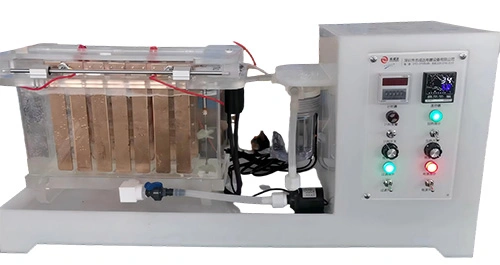
Plating Tanks
The laboratory plating tank is a precision-engineered benchtop surface treatment apparatus designed for chemical laboratories and R&D facilities to execute electrochemical deposition processes. This laboratory plating cell enables the precision coating of metal or non-metal substrates with specific metallic or alloy layers. Constructed from superior corrosion-resistant materials such as heavy-duty Polypropylene (PP) or FRP, this benchtop electroplating station ensures exceptional structural stability and longevity when exposed to aggressive acids, strong alkalis, and harsh chemical environments.
The plating tank utilizes a regulated DC power supply to deliver a continuous electrical current through the electrolyte. Under the influence of the electrical field, metal ions in the solution migrate and reduce onto the cathode (the workpiece), forming a highly uniform, dense crystalline coating. This pilot-scale finishing tank is an essential asset for electroplating process R&D, chemical formula testing, small-scale sample preparation, and educational laboratory demonstrations.
Standard 20L / 30L / 50L Laboratory Plating Tanks
- Premium Construction: The tank body is fabricated using high-grade PP sheets through advanced hot-melt welding, offering excellent resistance against aggressive acids and alkalis.
- Customizable Internal Hardware: Can be equipped with anode titanium baskets, anode bags, V-shaped copper contact seats, and φ25 copper cathode conductive bars based on specific processing needs.
- Modular Auxiliary Upgrades: Supports seamless integration of heating elements, solution filtration systems, miniature barrels, and centralized control panels. Advanced functions like mechanical rocking/agitation, electrolyte circulation, and variable-speed transmission can be incorporated.
- Flexible Sizing: Standard volumetric capacities include 10L, 20L, 30L, and 50L, with full customization available for any non-standard envelope dimension.
- Turnkey Efficiency: Delivers a one-stop, fully integrated solution that bridges the gap between lab-scale chemical testing and pilot-scale batch production.
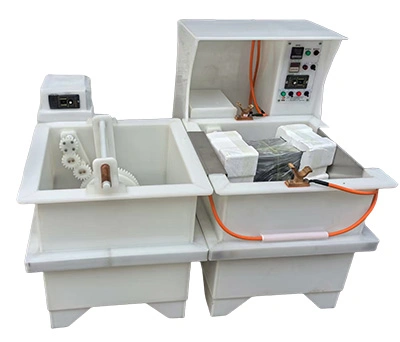
Horizontal Experimental Barrel Plating Tanks
- Uniform Tumbling: Features a side-mounted variable-speed drive motor that rotates the mini-barrel at a constant velocity, ensuring uniform part agitation and consistent coating thickness during the tumbling process.
- Simplified Architecture: Eliminates complex PLC logic in favor of a user-friendly, manual-assist control panel. The system is divided into four robust modules: the drive mechanism, the experimental tank body, the temperature/timing/filtration control stack, and the plating barrel.
- Ultra-Low Operating Costs: Extremely cost-effective initial capital outlay with zero high-wear components. The simplified piping and drive kinematics mean daily maintenance is limited to basic tank cleaning, reducing operational upkeep to near zero.
- Adaptive Tailoring: Fully customizable in terms of tank metallurgy, volumetric capacity, transmission stroke, and temperature control ranges.
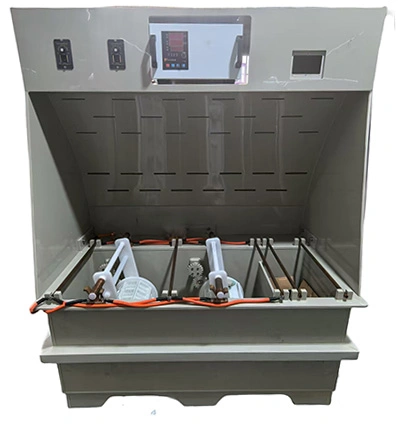
Experimental Plating Tanks with Exhaust Hoods
- Environmental Safety: Utilizes negative pressure generated by a dedicated exhaust blower to capture hazardous chemical vapors and acid mist directly from the solution surface.
- Ventilation Control: The captured fumes are drawn through the integrated fume hood into the workshop's ventilation system, where they undergo scrubbing or chemical neutralization before being safely discharged or recirculated.
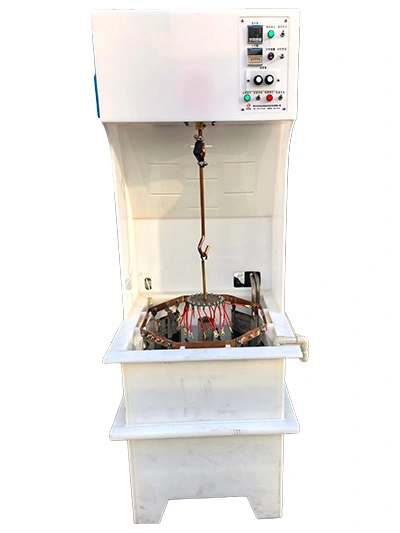
Integrated Rack & Barrel Plating Tanks
- Dual-Process Flexibility: A multi-functional hybrid laboratory electroplating system that merges both rack (hanging) and barrel (tumbling) processes into a single, compact footprint.
- Versatile Application: Specifically engineered to provide maximum processing agility for corporate R&D centers, additive testing labs, and academic institutions, allowing engineers to switch recipes between delicate individual components and bulk small hardware instantly.